
♫ Cellophane
Mister Cellophane
Shoulda been my name
Mister Cellophane
‘Cause you can look right through me
Walk right by me
And never know I’m there… ♫— “Chicago†– Music by John Kander with lyrics by Fred Ebb

We live in an age where there is a diversity of thought on privacy. There are those who live their lives openly with no reservations about inviting total strangers into their most intimate thought processes. For these people there is some kind of built-in animal instinct to expose themselves, to be totally open with the world and invite total strangers into their most intimate thought processes. Our ancestors lived in familial units where kinship was trusted and sharing was security. At the other end of the spectrum are those individuals to whom privacy is so guarded that any contact is considered an invasion of their rights. In this age, such people have secure locks on their doors both literally and psychologically. When looking at extremes it always is easy to say that the best alternative lies somewhere in between, but some situations require a cautious release of personal information into the unknown. The concept of privacy and security is somewhat elastic and careful consideration has to be given to how far and how much can be squeezed to fit into each situation. A job search is a privacy tight-rope walk.
“There is a three pronged process to be a successful seeker. You must know what you are looking for, you must be proactive and not passive in your search, and you must be “findable†to recruiters looking for people like you.â€
The first installment of being a successful seeker, the first prong of the search, focused on setting your destination. “If you don’t know where you are going, how will you know when you get there?†The discussion of the second prong of your search strategy was around ways to aggressively pursue your objectives. “Life is an all you can eat buffet and nobody is waiting on you.†The “hat trick†prong of the seeking methodology is to explore the ways to be visible to recruiters who may want you.

Third prong of the search – Be findable to recruiters (or, Invisibility is only important if your skill set involves robbing banks.)
For various reasons, some job seekers never admit that they are looking for employment. The unemployed sometimes are embarrassed by their current condition even if it is not due to any reason of their own making. Of course, job seekers who are still working must remain anonymous for fear of reprisal from their current employer. Both of these situations can be handled by a “controlled anonymity†with the understanding that the best course of action for optimal results would be to publicize widely that there you have a goal to find gainful employment. So how do you maintain a sense of privacy while attracting recruiters to find you? The answer is to think like recruiters and be where they are looking.
- Networking – Let people know that you are looking. Throughout this series of articles the term networking has been repeated ad nauseum because this remains the best way to find employment. Beginning with trusted family and friends, expand the network as we have discussed previously. If you believe only slightly in the concept of “Six Degrees of Separation†from everyone else on earth, somebody will know a recruiter or hiring manager. But the reality is that it works in reverse and recruiters are already looking for you. For the casual network of friends, leaving things to chance is good enough. For professional recruiters and job seekers, it is a way of life and a key to survival.
- Job boards – No, this is not déjà vu all over again. Most of them will allow you to post a resume anonymously or hide it altogether. Before you consider posting an anonymous resume, there are two things to consider. First you must totally neuter the text so that you cannot be identified. If you are hiding your job search from a current employer, it looks stupid to a recruiter to find a so-called anonymous resume with references, companies, phone numbers and addresses (yes this does happen). Second, you need to seriously consider the value to be gained by going anonymous. You never know the situation faced by the recruiter. If your resume pops up in a search along with several others with contact information revealed you may not even get a chance to be in the mix. Assuming that you have a strong match to the search criteria, recognize that you are forcing the recruiter to take an extra step to reach you. When you get an email in response to an anonymous posting, always reply immediately. Even if it is exploratory in nature it could be a step toward another contact or job.
- Social media – Are you a Twitter Egg? Complete profiles always generate the most response on Twitter, Facebook and LinkedIn. If you are a job seeker, having a complete profile on all social media outlets make you more attractive to those looking for you. It is not that recruiters will be attracted to your appearance as much as they will be attracted to your profile and the completeness of your work.
- LinkedIn is a key place to be visible because it has been looked at as the more professional of the online areas since it began. A complete profile and work history are important if you want to be found, with particular attention given to making sure that your resume doesn’t make you look like an entirely different person.
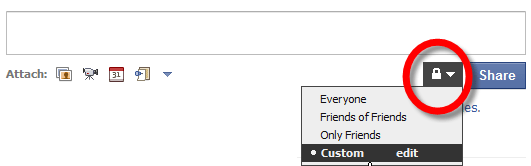
- Facebook traditionally has been an area for sharing with family and personal friends, but recruiters search this environment as well. Worried about exposing too much of you? Create two groups in Facebook for all of your friends: Personal and Professional. When you post any message, click on the lock icon and select “Custom†from the drop-down menu. Then you can choose from either of these two groups or other individuals exclusively. Of course, recruiters know how to deep search for anything you have, so make sure you also set your privacy settings to the degree of external exposure you want. NEVER accept Facebook’s default privacy measures or allow your image to be used by other programs or people.
- In addition to differentiating you from the default Twitter “egg†picture, do NOT protect your tweets if you are a job seeker. Recruiters don’t protect theirs. How much difficulty is it to manage responses manually? If you follow a recruiter and in following you back he encounters a roadblock, he might just pass and move on. You need to be aware of the message you are sending in either case.
- Don’t even think about going there – The usual taboo subjects are even more important when you have broadcast something to the world. Just ask a certain former NY Congressman about the trouble that causes. You do not have to censor yourself, but be aware that comments related to racial profiling, ethnic slurs, sexist or similar topics are against policy in most companies and such comments will make you unsuitable for hire. Political and religious viewpoints are a normal part of conversation in everyday life, but be careful not to appear bigoted or disrespectful. Language is important and a few four-letter words can be used to punctuate an idea, but dropping the F-bomb with every tweet gives the impression that you are limited in how you express yourself. Yes, recruiters are watching, but act as if your mother is watching and behave yourself.
Being visible is different than being not-invisible. If you study where recruiters hang out, be there. Put yourself in his lens and don’t make it difficult to focus on your skills and achievements.
Job Seekers: Think Like a Recruiter
- Part 1 – Beginning the Process
- Part 2 – Who Are the Recruiters?
- Part 3 – Inventory of Skills and Accomplishments
- Part 4 – The Resume
- Part 5 – Cover Letters
- Part 6 – Creating a search plan
- Part 7 – The Active Search
[pageview url=”http://www.youtube.com/embed/CYt2hTGAGAk?rel=0″ width=”480″ height=”390″]
Pingback: The Job Seeker’s Guide To The Galaxy And Other Places » Make HR Happen
Comments are closed.